
Configure test metrics for success
Most A/B Tests Don't Fail Because of Bad Variants
They fail because teams measure the wrong thing.
One of the first questions every experimentation platform asks is:
What's your primary metric?
Most of us don't spend much time thinking about the answer.
We pick something measurable.
Add to Cart
Click CTA
Form Submit
Then we launch the experiment.
A week later, the results come back.
Add to Cart is up 18%.
Looks like a winner.
Or is it?
Did those extra clicks lead anyone to checkout?
Did they complete a purchase?
Or did your new design simply make the button more noticeable?
Your experiment answered the question you asked.
It just wasn't the question you actually cared about.
One thing we've learned while building CrowAI is that every metric is really a claim.
When you choose a primary metric, you're saying:
"If this number improves, I believe my business has improved."
That's a surprisingly big claim to make from a dropdown menu.
The closer your metric is to the business outcome you're trying to influence, the more confidence you'll have in the decisions you make.
That's why the closer your metric is to the business outcome you're trying to influence, the more confidence you'll have in the decisions you make.
If I asked you what a successful visit looks like, you probably wouldn't say:
"An Add to Cart event fired."
You'd probably say:
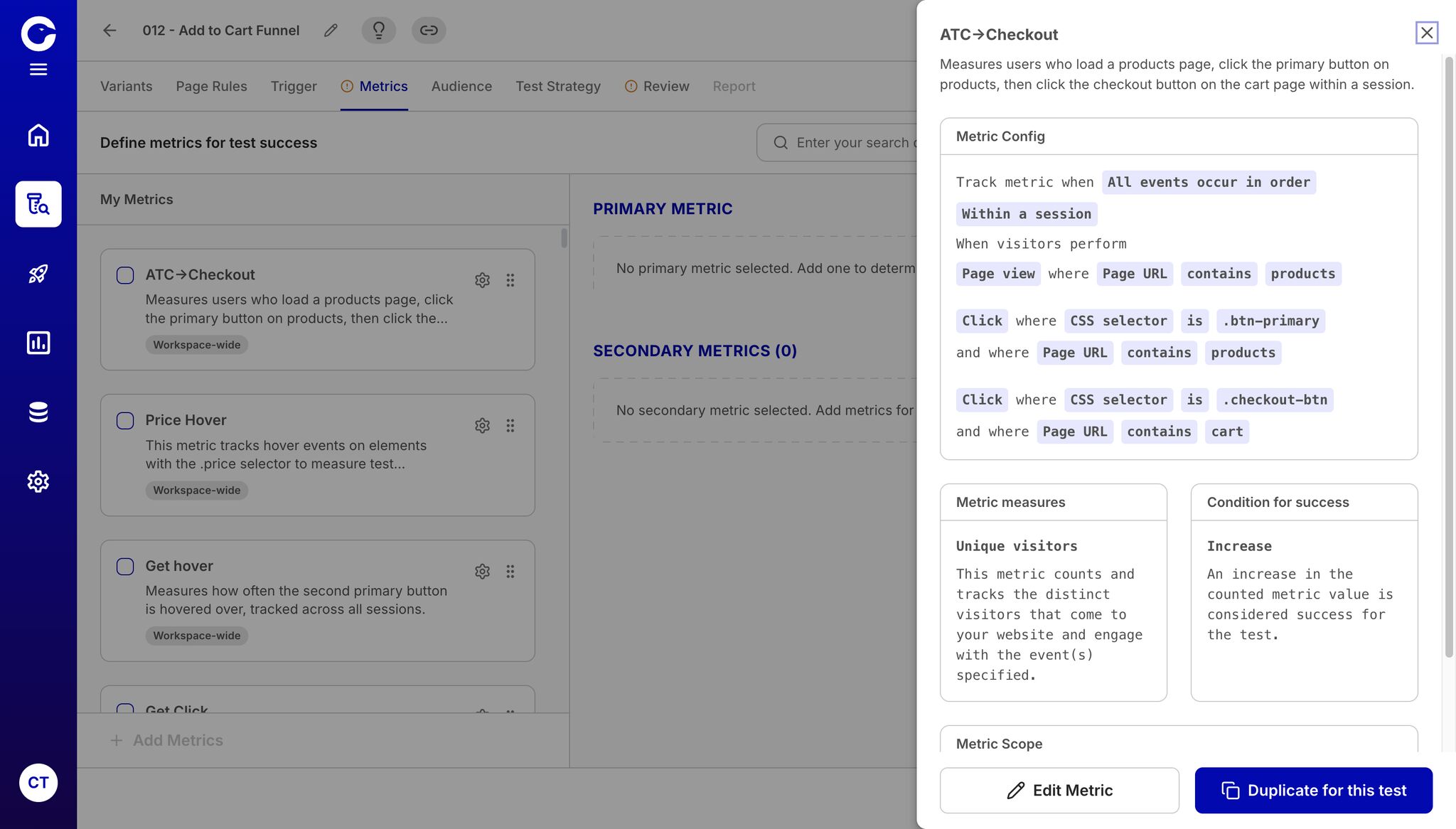
"They viewed the product, added it to their cart and reached checkout."
That's how people think.
Why shouldn't experimentation tools work the same way?
Imagine two metrics from the same experiment.
Metric A
Add to Cart
+18%
✅ Ship it
vs.
Metric B
Viewed Product
▼
Added to Cart
▼
Reached Checkout
No Change
🤔 Investigate further
The first tells you people clicked more.
The second tells you whether they actually moved closer to buying.
That's a much better decision.
The interesting part is that teams rarely struggle to define success.
Ask a marketer or product manager what a successful customer journey looks like, and they'll describe it almost immediately.
The challenge isn't defining success.
It's translating that definition into something software can measure.
For too long, that translation has meant engineering support to write custom JavaScript, followed by testing and deployment.
We think software should handle that translation instead.
That's exactly what we've built at CrowAI.
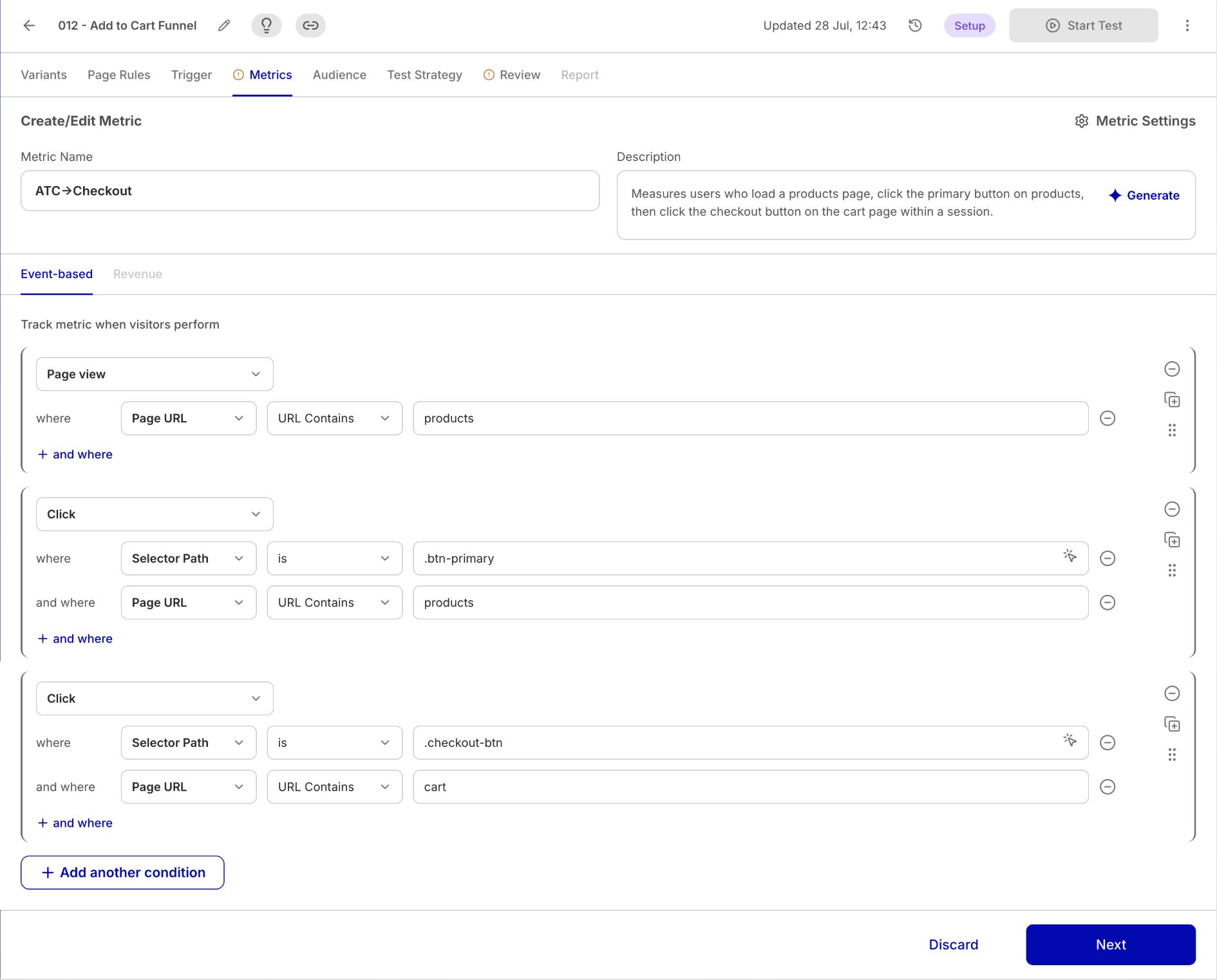
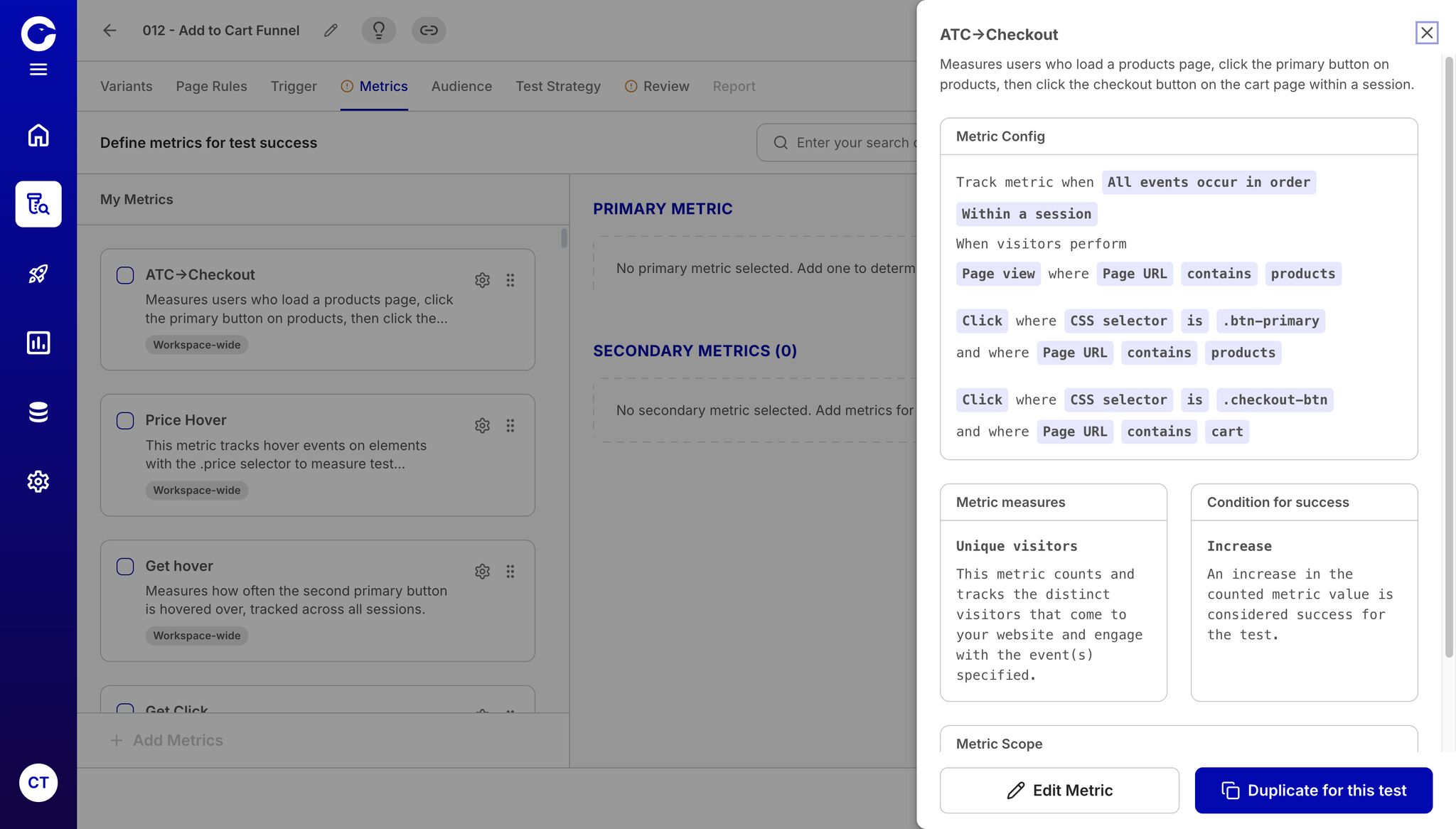
Instead of asking engineering to translate a customer journey into custom JavaScript, you define that journey as a single success metric inside your experiment. We call it a Composite Metric.
Because experimentation isn't really about measuring clicks.
It's about reducing uncertainty.
The goal of a metric isn't to count events.
It's to increase your confidence that your experiment genuinely improved the business.
The best experimentation platforms shouldn't just help you run more experiments.They should help you make better decisions.